
Changing careers is usually an attempt to move away from what drains you and toward what sustains you. For neurodivergent adults, this process requires looking through the lens of executive function and sensory needs.
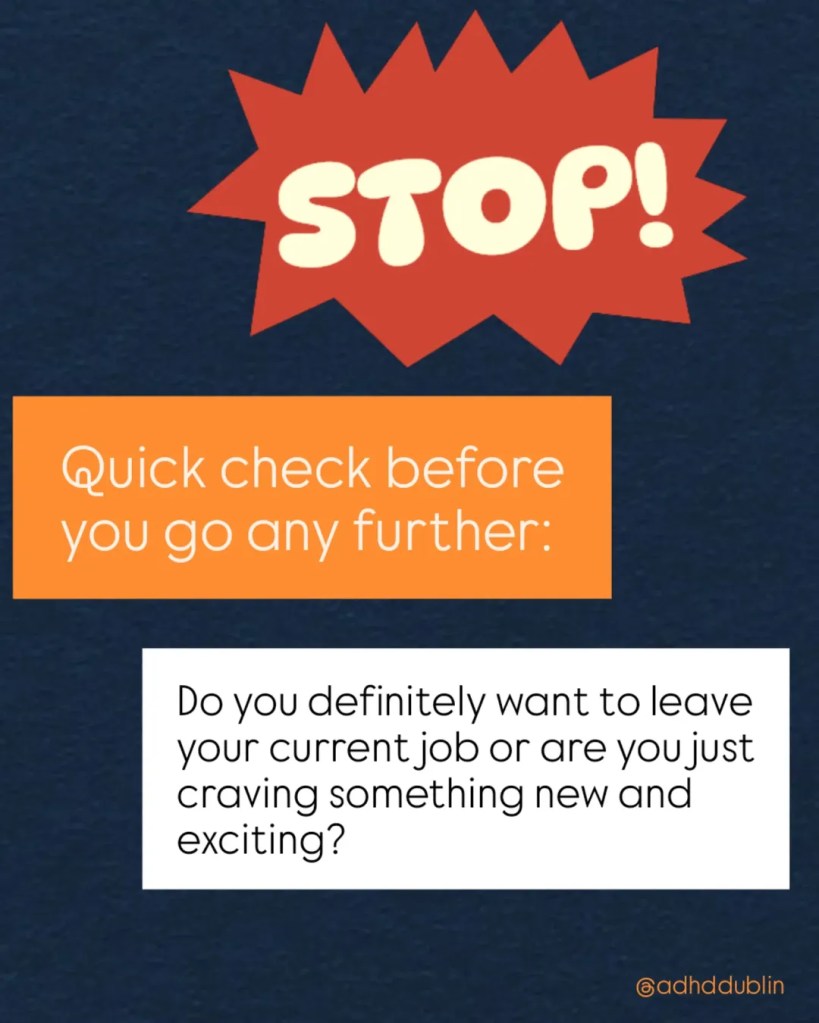
The “Novelty vs. Change” Check
Before making a move, it is vital to check if you are seeking a genuine career shift or simply responding to the ADHD brain’s natural craving for novelty. Are you throwing out the “baby with the stagnant bathwater,” or is the current environment truly unsustainable?
Auditing Your Environment
To avoid burning out in a new role, consider these sensory and value-based questions:
- Sensory Profile: Which environments overstimulate you (noise, bright lights, high social demand)? Which ones invigorate or calm you?
- Identify Your Strengths: What are you proud of in your career so far? Which of your strengths are currently being utilized, and which are being neglected?
- The “Personality Transplant” Test: Does the job require you to be someone you aren’t? (e.g., A high-energy role when you struggle with fatigue).
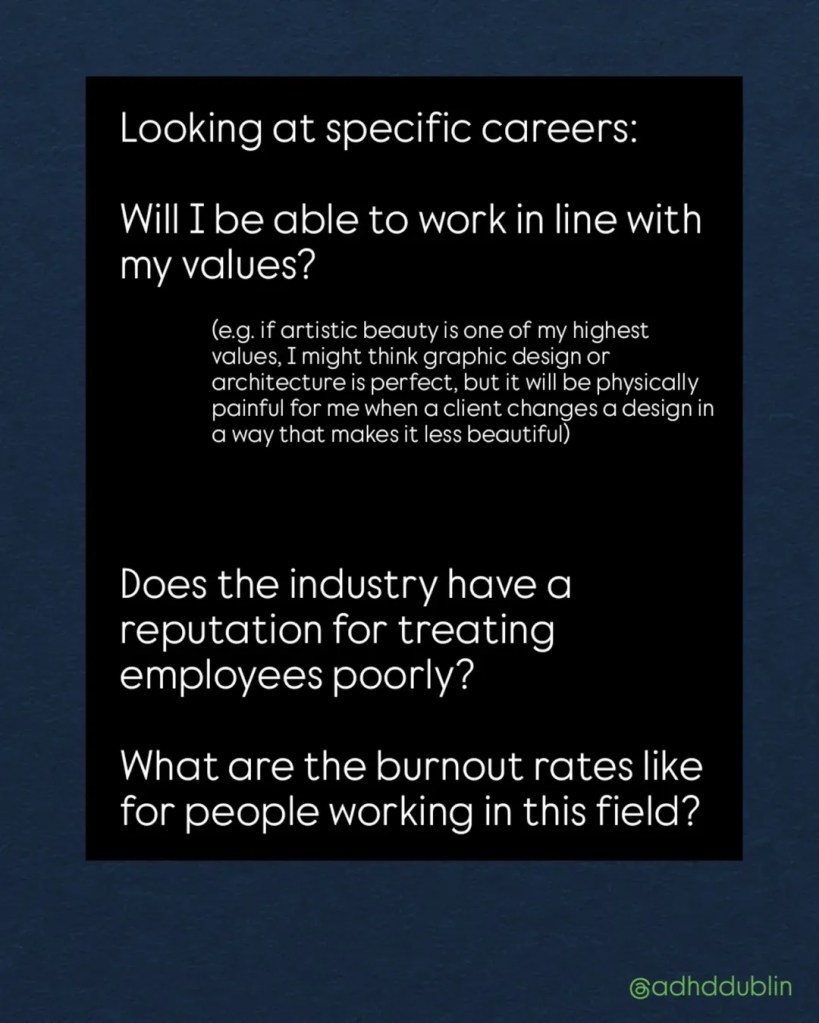
- Core Values: You will struggle to maintain consistency in a role that contradicts your personal values.
Values Clarification: A Tool for Career Direction
Before committing to a new direction, it is helpful to define what truly matters to you. Use this values clarification exercise to determine if a potential career path aligns.
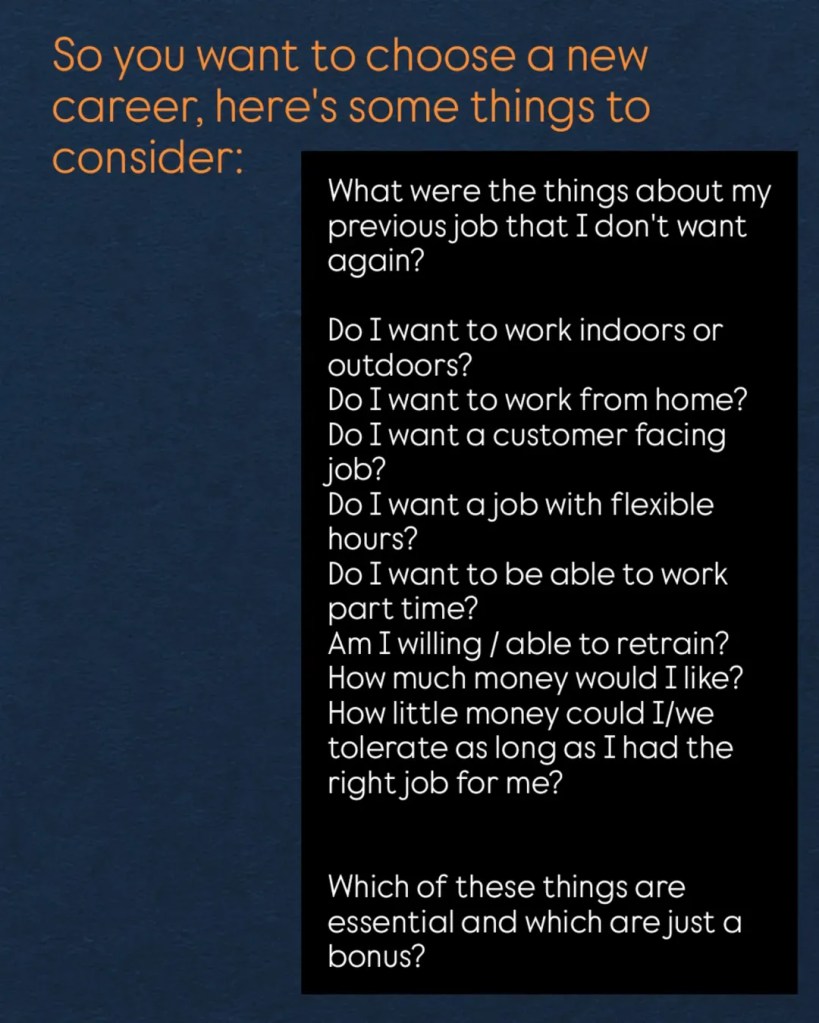
Navigating a career change with ADHD requires a strategic evaluation of workplace environments and personal financial needs to ensure long-term professional stability.
Professional Resources
If you are at a crossroads, consider consulting a qualified Job Coach. Think of them as guidance counselors for adults; they provide aptitude tests and practical research into courses and career paths that align with your specific neurotype.
If you have ADHD in Ireland, or are otherwise neurodivergent, you can access government-funded employment supports catered to your neurotype through specialisterne.ie , including a paid job-coaching service.
The government also have a free online service which allows you to do an Interests Test and get career and advice about training options: CareersPortal.ie
Another helpful resource is this one from Dr. Ned Hallowell, who has written an article with 18 questions to ask yourself before changing career.
Support for Workplace Burnout
Often, the desire for a career change comes after years of ADHD burnout. Masking, camouflaging, working through fatigue, compensating for executive dysfunction, tolerating sensory nightmares, all of this contributes to burnout. For those navigating the emotional weight of career transitions or professional burnout, I provide neuro-affirming psychotherapy in Maynooth and Dublin 2.
Recent Posts
Quick Reference: ADHD Career Transition Planning
| Factor | ADHD Consideration | Career Strategy |
| Novelty | Risk of “boredom burnout” in repetitive roles. | Look for roles with project-based variety. |
| Sensory Load | Overstimulation leads to rapid exhaustion. | Audit the physical workspace and remote options. |
| Executive Function | Difficulty with certain roles. | Match the job to your natural energy levels and strengths. |
| Sustainability | Avoiding the “masking” cycle in professional life. | Prioritize values and non-negotiable deal-breakers. |
Disclaimer: The information provided in this article is for educational and informational purposes only and does not constitute professional medical advice, diagnosis, or career counseling.
Author:
Rebecca Bourke, BSc (Hons), MIACP
Accredited Counsellor & Psychotherapist
Information reviewed May, 2026


Leave a Reply