
Everybody feels tired sometimes and adult life is very demanding, but what if you barely have the energy to get by? What if demands of the day leave you absolutely exhausted, or a quivering wreck?
Almost 60% of people with ADHD meet criteria for fatigue even have similar levels of impairment to people diagnosed with Chronic Fatigue Syndrome. An even higher percentage feel that their energy levels are much lower than what appears to be the norm.
Stop! Before you go any further: there are many medical issues that could be contributing to or full on causing your fatigue, so be sure to rule them out with a doctor.
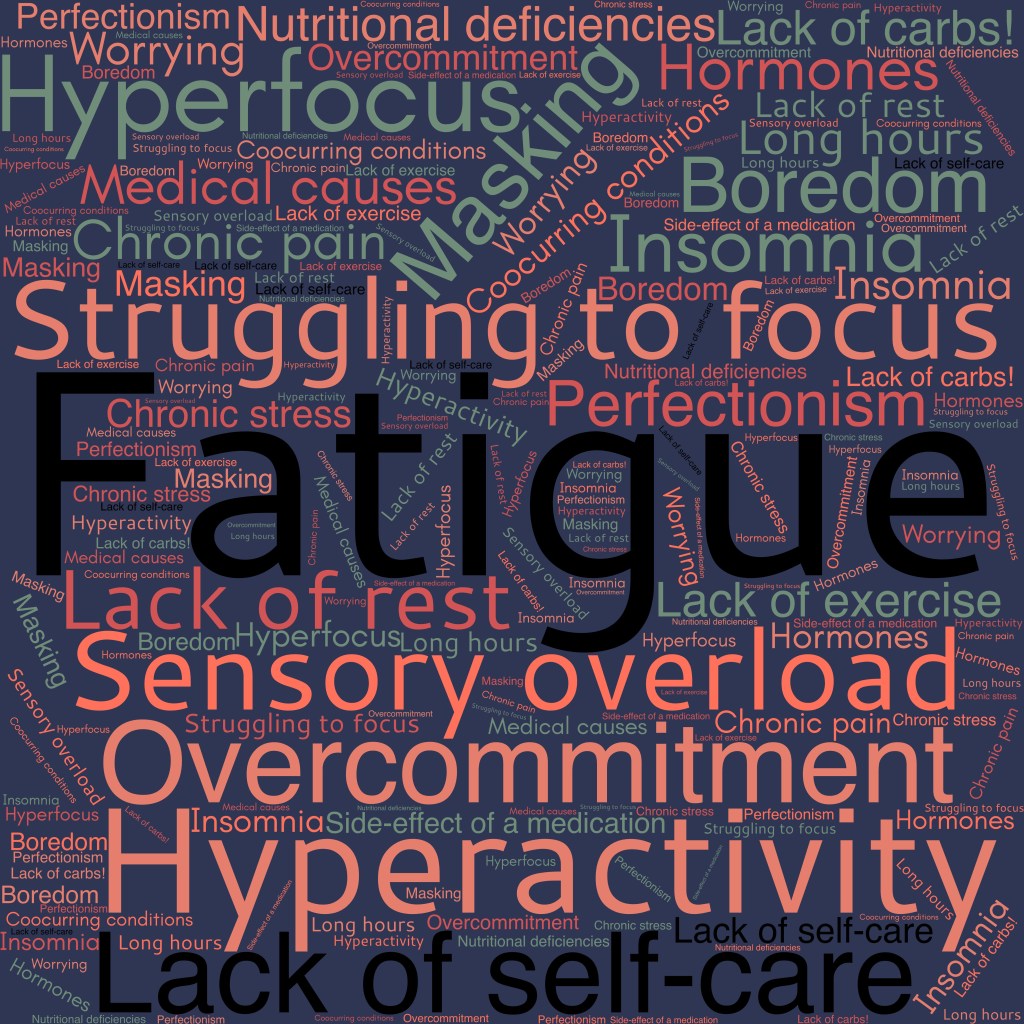
What Causes Chronic Fatigue in Adults with ADHD?
I’m not a maths person, but let me try a formula:
Energy deficit:
baseline energy + energy from fuel + energy from rest + energy from refreshment ≤ demands
Fatigue builds up when you have an energy deficit for a prolonged period of time.
Understanding the ADHD Boom and Bust Energy Cycle
Seeking stimulation, or just the demands of adult life, can mean alternating between periods of intense activity and periods of exhaustion / fatigue, potentially leading to burnout.
For people with fatigue in general, a good day is such a precious thing that there’s a tendency to take on too much and try to do too much, not leaving a drop of energy leftover. This leaves us totally drained the next few days. With ADHD, there are extra contributers to this boom and bust cycle:
- Time agnosia: I can take on this little volunteer role, it won’t take much time out of my week
- Hyperfixations: I can start this DIY project now, it will be fun and I’m excited about it!
- Hyperfocus: I got so into the task I couldn’t stop
- Stimulation seeking: I can’t stand having nothing to do!
How to Manage ADHD Fatigue and Avoid Burnout
You don’t have direct control over your fatigue levels but you can address some of what contributes to it. Here’s some things that might help:
- Don’t hold yourself to the standard of the most intense day without considering the cost of that
- Energy Management (more on this later)
- Plan breaks, and know what you find restful and what you find refreshing
- Identify which activities you do are high drains, medium drains, and low energy. Include time for less draining activities in your day
- Choose your battles, e.g. a comedy show might be really draining but also a wonderful and meaningful experience for you, so maybe it’s worth it (and maybe not). Meanwhile, a work event might be equally draining but neither enjoyable nor meaningful, so check if it’s necessary, or it can be timed in a way that allows recovery.
- Stimulant or non-stimulant ADHD medication
- Exercise, nutritious eating, and sleep
- Reduced screen time has been shown to help some people, though I haven’t seen any ADHD or CFS specific studies. (It probably depends on what is being done on the screen, and what you do instead. I can’t see reading and watching movies being as draining or intefereing with sleep as much as scrolling social media, total speculation).
ADHD Energy Management Strategies and Tips
Energy management is figuring out how to best use the energy you do have without worsening symptoms by going too far. It means adjusting activity levels according to your current energy needs.
There’s a few guides to doing this that I’m going to share, but I’m going to try to do an ADHD-friendly “gist” version here, shortening both the explanation and the process itself.
The gist:
- If paper, get some coloured pencils or pens or highlighters in advance.
- Write out a diary of your average busy day, hour by hour.
- Now circle the high energy demand activities in red, the medium demand ones in yellow, the low demand in green, and the energy-giving refreshing activities in blue.
Can you: - Balance the colours more evenly?
- Insert more blue activities and rests? (even if they are short?)
- Balance different types of demands on a given day? (e.g. a balance of things that are draining physically, mentally, socially, emotionally, or due to sensory demands)
If this isn’t helpful, don’t say “I tried energy management and it didn’t work! Check out one of these more detailed guides:
The UK’s NHS have a free workbook you can use for energy management.
PoTS UK have a great guide to fatigue management, you don’t need to have PoTS to benefit from it.
References:
Cerrillo-Urbina, A. J., García-Hermoso, A., Sánchez-López, M., Pardo-Guijarro, M. J., Santos Gómez, J. L., and Martínez-Vizcaíno, V. (2015) The effects of physical exercise in children with attention deficit hyperactivity disorder: a systematic review and meta-analysis of randomized control trials. Child: Care, Health and Development, 41: 779–788. doi: 10.1111/cch.12255.
Michelson, D., Adler, L., Spencer, T., Reimherr, F. W., West, S. A., Allen, A. J., Kelsey, D., Wernicke, J., Dietrich, A., & Milton, D. (2003). Atomoxetine in adults with ADHD: Two randomized, placebo-controlled studies. Biological Psychiatry, 53(2), 112–120. https://doi.org/10.1016/s0006-3223(02)01671-2
Noah Castelo, Kostadin Kushlev, Adrian F Ward, Michael Esterman, Peter B Reiner, Blocking mobile internet on smartphones improves sustained attention, mental health, and subjective well-being, PNAS Nexus, Volume 4, Issue 2, February 2025, pgaf017, https://doi.org/10.1093/pnasnexus/pgaf017
Rogers, D. C., Dittner, A. J., Rimes, K. A., & Chalder, T. (2017). Fatigue in an adult attention deficit hyperactivity disorder population: A trans‐diagnostic approach. British Journal of Clinical Psychology, 56(1), 33–52. https://doi.org/10.1111/bjc.12119
Summary: Navigating adult ADHD often means dealing with chronic exhaustion and energy deficits that can feel remarkably similar to chronic fatigue syndrome. The ADHD boom and bust cycle—fueled by hyperfocus, time agnosia, and executive dysfunction—frequently leads to severe neurodivergent burnout. However, by understanding your baseline energy and implementing targeted energy management strategies, you can begin to break this cycle. Whether you are exploring medication, lifestyle adjustments, or seeking professional support from an ADHD therapist, learning how to pace your daily demands is a vital step toward sustainable recovery and improved mental health.
Disclaimer: The information provided in this article is for educational and informational purposes only and does not constitute professional medical advice, diagnosis, or counselling.
Author:
Rebecca Bourke, BSc (Hons), MIACP
Accredited Counsellor & Psychotherapist | ADHD Specialist
Last reviewed: May 2026


Leave a Reply