
What happens when the relationship itself becomes a hyperfixation?
The excitement of having a crush or meeting a special person is a great feeling that most people are familiar with, but with ADHD it’s not unusual for feelings of any sort to get turned up to 11, and this joy is no exception. For some people with ADHD, this can feed a hyperfixation.
So what to do, and what course might this take?
How do I tell if this is limerence / hyperfixation verses real feelings for someone?
It could well be both, but what if it’s only a hyperfixation? In that case you’ll probably not have much in common with the person, and being with them will probably require a bit of a personality transplant from you. During the limerence a personality transplant might feel like a fine and reasonable thing to do, but that’s not a sustainable way of being.

“We both get nosebleeds.”
Are you finding obscure details to prove that you’ve found your soulmate, or are these things that you valued before you ever met this person?
Am I love-bombing!? Is love-bombing an ADHD thing?
Love-bombing is an intentional manipulation tactic. It’s different from hyperfixation but you don’t want to do anything that even resembles it. It’s not helpful to make your hyperfixation into their issue, for example, don’t get a tattoo of their name while you’re still obsessed with them! Don’t start “speaking all the love languages” at them all the time! At the same time, it’s not helpful or necessary to play games and pretend you aren’t interested in them if you are.
Put all that enthusiasm and energy into building a strong foundation for your relationship. Do the hard stuff, not just the fun stuff:
- Read about what makes relationships strong (the work of John and Julie Gottman is great for this)
- Find out from them more about them and their interests
- Enjoy shared activities
- Start to tackle your RSD so you can have open communication
- Get to know their friends
- Find out what their dreams are and what you can do now to support them in their dreams
Focus on building that foundation in the present and what you can do in the present; don’t make promises and huge commitments during this period. It’s beautiful and good and that’s not what it’s for.
Have a look at the diagram below, it shows the types of love that can arise from combinations of passion, intimacy, and commitment.
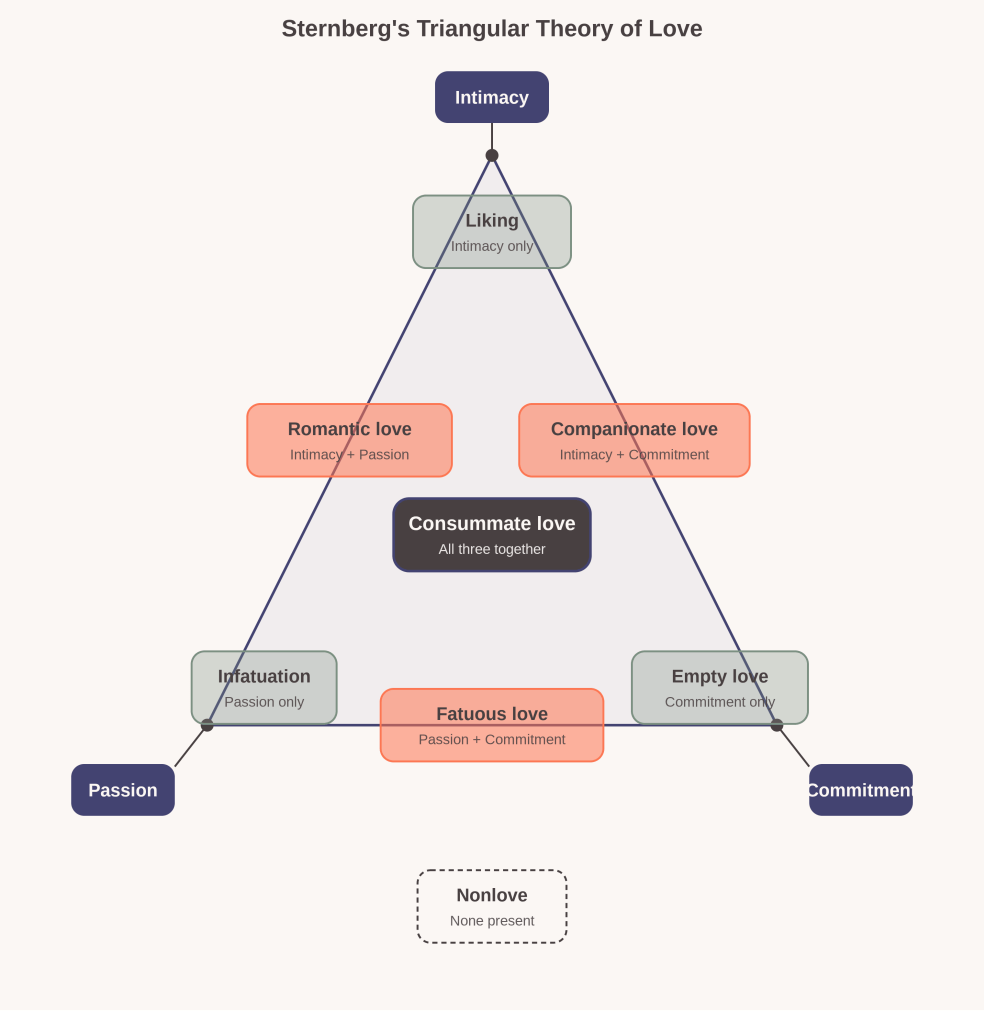
What we want is to move from passion alone (Infatuation) through to passion + intimacy (Romantic love) and only then onto commitment, achieving all three (Consummate love), which may then ebb and flow between this and Companionate love, intimacy + commitment. What you don’t want is for your hyperfixation to take you to Fatuous love, passion without intimacy, so that one day you end up in Empty Love, commitment without passion or intimacy. This is why I am emphasizing the importance of building that solid foundation of intimacy.
If I’m hyperfixated on my partner, does that mean I’m going to stop liking them?
Absolutely not, ADHD hyperfixations don’t tend to last, but that doesn’t reflect on the relationship. Here are just a few of the things that can happen after it ends:
– You continue building a strong relationship, now fueled by growing love and mutual respect and admiration, rather than hyperfixation.
– You feel ok in your ADHD relationship but you start to hyperfixate on something else, this might make the other person feel forgotten about.
– You notice you genuinely don’t have a lot in common with this person or feel good around and you may not be a good fit.
– You have a fearful or avoidant attachment style and that kicks in when you get closer to the person, making you question the relationship for reasons that have nothing to do with the relationship or the person themselves.
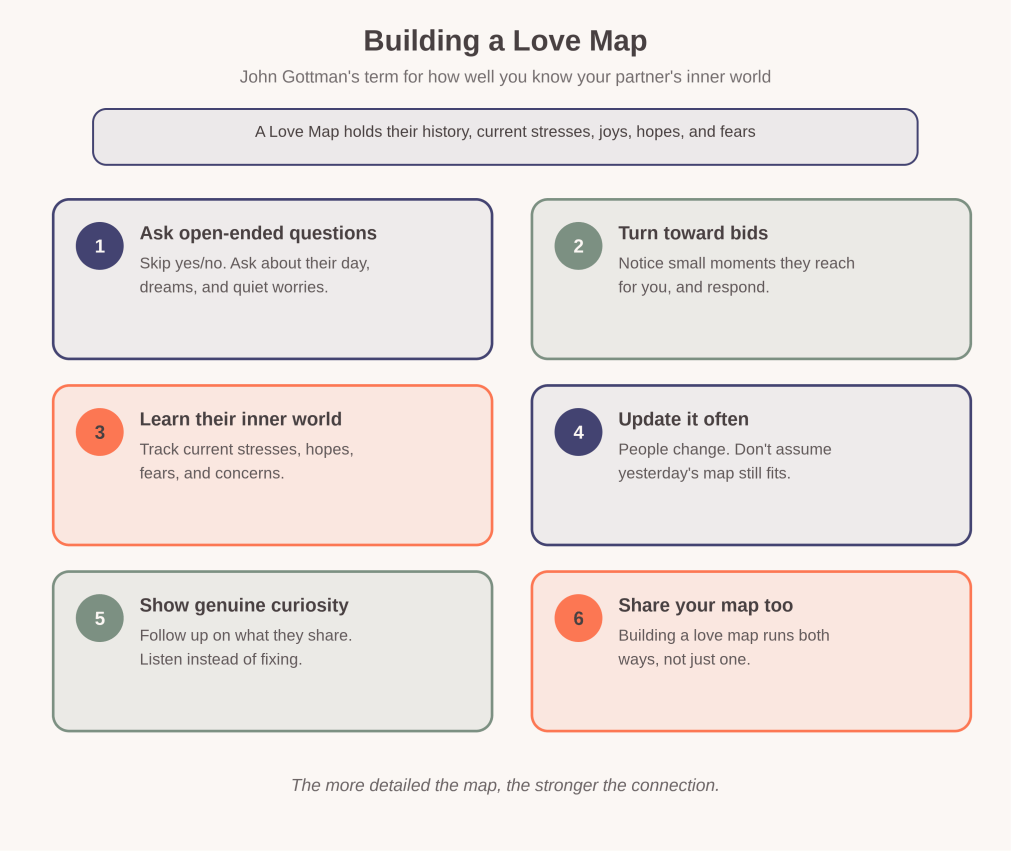
Again, building intimacy is important to building the kind of relationship you’ll both want to last. Here’s a summary of a few of Gottman’s ideas around this:
I’m already in a relationship, so how do I stop the intensity from fading and turning into boredom?
Don’t forget that it’s not your partner’s role to entertain you. Find shared interests you can enjoy together while maintaining your own individual hobbies. Also, that’s a question that often goes with avoidant attachment, so you might want to understand your attachment style in case it tries to sabotage a good relationship.
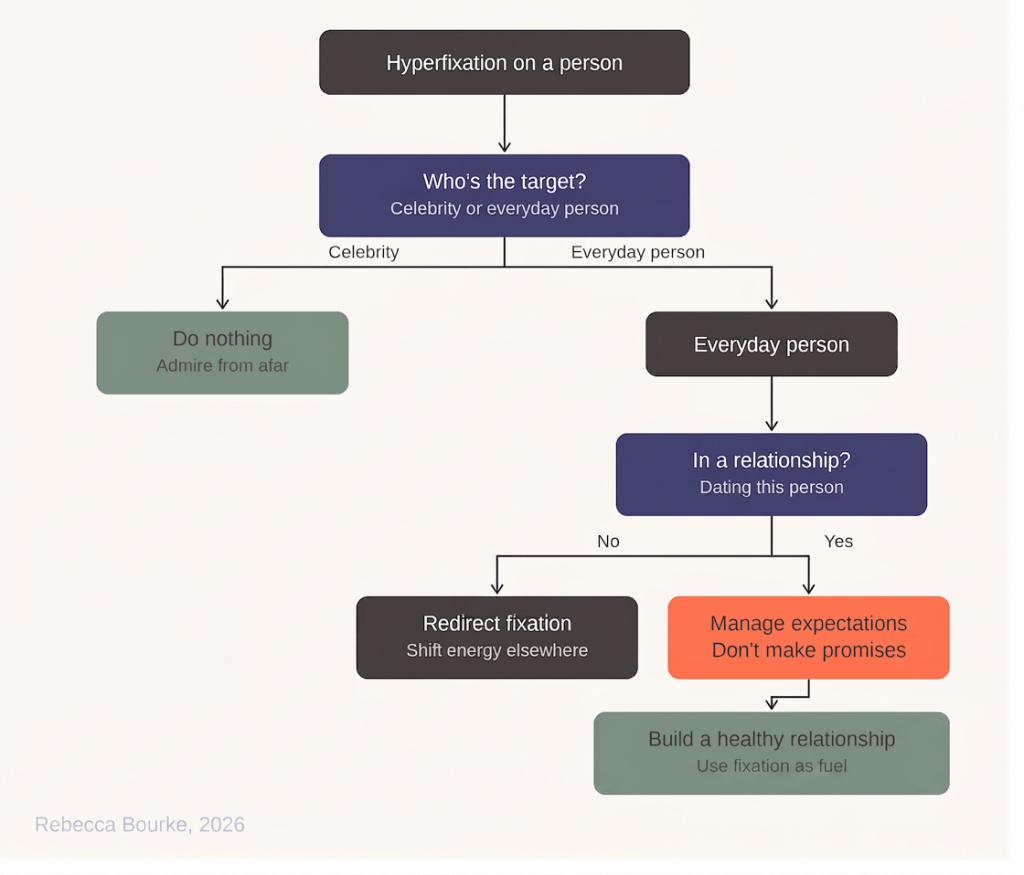
How do I stop obsessively thinking about this person / quiet the intrusive thoughts? And what if I’m hyperfixated on someone I’m not even dating?
Ask them out! If they aren’t interested, or you are thinking about the person more than you want, try to steer the hyperfixation in another direction. This is difficult to do and if you aren’t having any luck, one thing that can help is choosing an interest somewhat adjacent to the person. Say you’re hyperfixated on Bjork, you could cultivate a hyperfixation for Iceland or the Icelandic language. Of course, never use this stuff to ingratiate yourself to the person you are hyperfixated on. That would be inauthentic and manipulative… and probably quite transparent! The point is to help you steer your hyperfixation away from the person.
⊹₊ To conclude, by understanding your attachment style and intentionally building true intimacy, you can navigate ADHD relationship hyperfixation and foster a secure, lasting connection, whether on your own or with the support of a neuro-affirming therapist in Maynooth, Co. Kildare.”
References:
Bains, C. (2025, January 7). ADHD and limerence. The Psychologist.
Gottman, J. M., & Silver, N. (2012). What makes love last? How to build trust and avoid betrayal. Simon & Schuster.
Gottman, J. M. (2026). The sound relationship house: Build love maps.
Madey, S. F., & Rodgers, L. (2009). The effect of attachment and Sternberg’s triangular theory of love on relationship satisfaction. Individual Differences Research, 7(2), 76–84.
Paquette, V., Rapaport, M., St-Louis, A. C., & Vallerand, R. J. (2020). Why are you passionately in love? Attachment styles as determinants of romantic passion and conflict resolution strategies. Motivation & Emotion, 44(4), 621–639.


Leave a Reply