
ACT for ADHD is having a moment in Ireland, with ADHD Ireland and UCD working together to provide a HSE-funded program called UMAAP, which is based on ACT, and more and more psychotherapists offering it. But what is ACT? How does it work? What should I expect?
What is Acceptance and Commitment Therapy (ACT) for ADHD?
Acceptance and Commitment therapy is an integrative therapy that draws on several other schools and philosophies of psychotherapy. It’s a very flexible and client-centred psychotherapy, where your own goals and values are the guiding light.
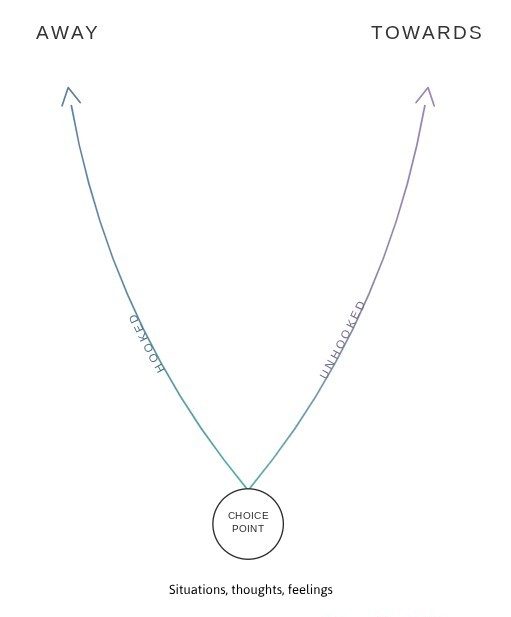
Rather than taking a fault-finding stance, ACT looks at a situation, thought or feeling and asks this question:
Does acting on this bring me towards my goals, values and the life I want to lead, or further away?
In order to allow us to ask and answer this question, especially at moments when we might most need to, ACT provides various tools and suggests alternative ways of looking at certain things.
Moving past masking and shame
Neurodivergent people have usually spent years, if not decades, of their lives feeling deeply flawed, lazy and / or broken, perhaps even having been told as much by others. This results in constant attempts to hide or “mask” neurodivergent traits. In ADHD this might look like faking energy levels you don’t have, saying nothing at all for fear of saying too much, attempting to appear neurotypical in social interactions, using perfectionism to compensate for perceived deficits, and much more. This internal struggle against our own neurobiology is our mind trying to find ways to keep us safe, but it has a cost.
ACT is in an inherently non-pathologizing approach which does not see human beings as broken and in need of fixing or sick and in need of curing. A neurodivergence-informed therapist will acknowledge the reality of widespread abelism and the near-inevitability of some internalized abelism too. Rather than struggling against the frightened internal part of ourselves that admonishes us, or the vilifying the hurt and hypervigilant part on the look out for potential criticism, ACT sees how much sense these behaviours make in the context of our lives and the society we live in, and asks how workable they are now, whether they bring us towards or away from the life we want to lead, and whether or not there are other options that may be more workable for us.
In this way, we can both completely accept ourselves and our neurodivergent brains, while also making some changes to our lives we’ve been yearning for.
How psychological flexibility supports the ADHD brain
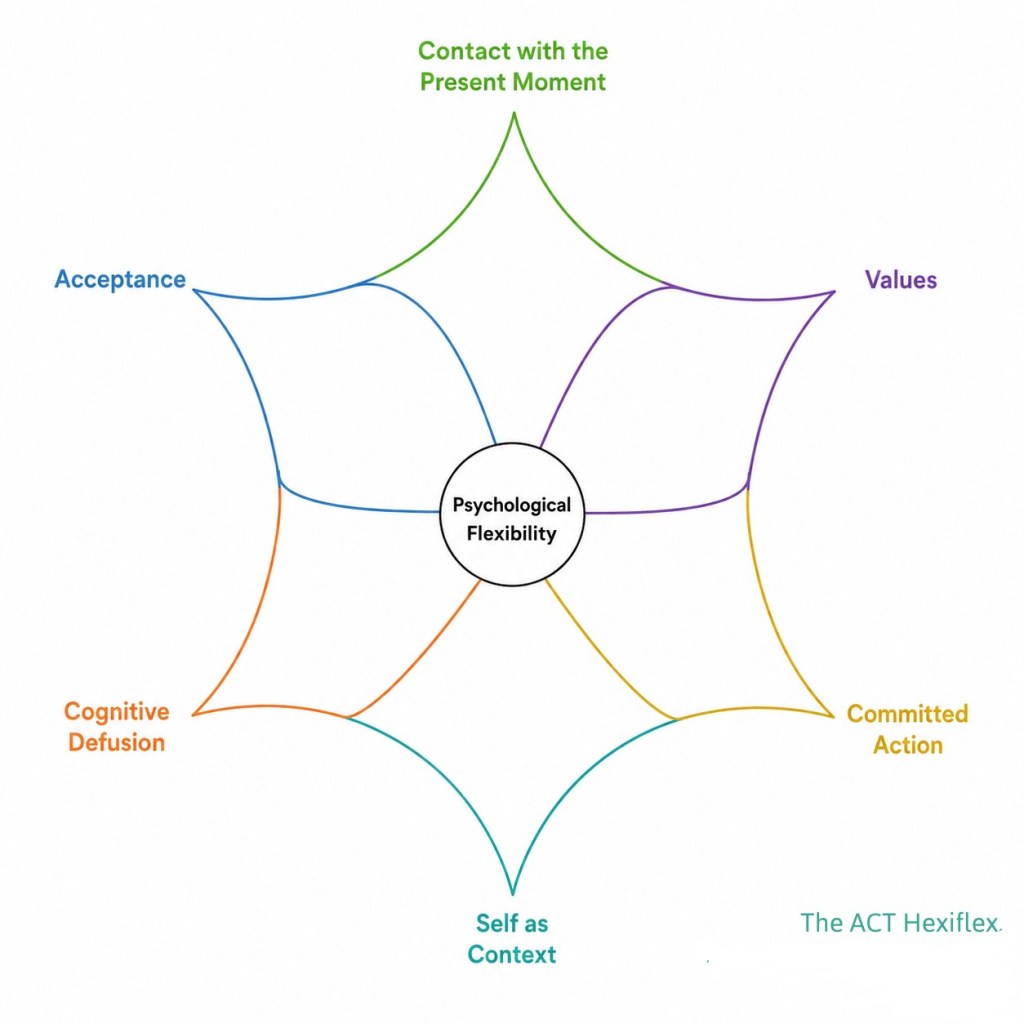
Psychological flexibility, which is the core goal of ACT, is about learning to co-exist with a busy, unpredictable nervous system without letting it hijack your actions.
Key benefits of using ACT for Adult ADHD management
ACT can help with emotional regulation; reduce burnout, anxiety and depression; foster self-compassion; increase distress tolerance; increase time spent with fulfilling and recharging activities rather than procrastination and distraction, and give you more choices about how you spend your time.
Defusion techniques for hyperfocus and racing thoughts
Defusion techniques are exercises, as quick as 5 seconds or as long as 5 minutes, which can be especially helpful for adults with ADHD whose hyperfocus can become unworkable at times, for people whose thoughts race, and for those with a lot of internalized shame and abelism. These are exercises which allow you to take a step back from the thoughts, which can make them feel less “loud” and more manageable.
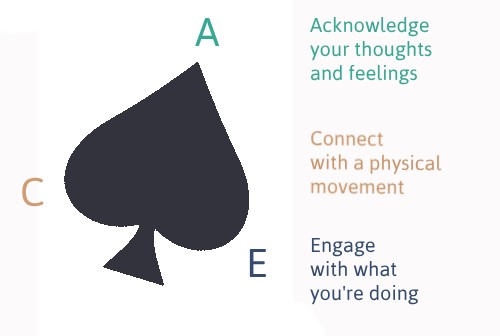
One example of a defusion exercise is this three-step-method of “Dropping Anchor”
Acknowledge: Acknowledge what is coming up for you in this moment. E.g. I’m noticing my thoughts are racing….I notice I’m having the thought that… I’m noticing the feeling of… I’m noticing the bodily sensation of… and so on with memories, perceptions, thoughts-about-thoughts and feelings-about-feelings! etc.
Connect: Connect with a movement or action. E.g. Stretch, stim, stand up and walk around, press your feet into the floor and feel what that’s like, whatever feels good in this moment. If you’d rather avoid connecting with any physical sensation (e.g. if you suffer from chronic pain), try connecting with the room you are in. E.g. notice how many blue things there are in this room.
Engage: Engage with the task at hand. E.g. Maybe you’re returning your focus to the work you’re doing, maybe you are thinking about your personal values and deciding to put your hyperfocus away so you can sleep, if that is more important to you right now.
An ACT therapist may use an exercise like this in the therapy room with you, to help you practice. Where possible, you might even be encouraged to use it to steer your focus in a true-to-life situation, as in the Russ Harris video below.
Handling executive dysfunction without the guilt
Defusion exercises like the one above can help us stay aware of our values, enabling us not to get hooked so often on some of the things which might add extra obstacles to executive function and time management in ADHD. This might include feelings like a craving, which can be “surfed”, or include old coping mechanisms which have proven unworkable for you. Commonly, perfectionism, procrastination, harsh self-criticism as a motivator, or overly rigid rules and routines (“it didn’t get done in the morning so now there’s no point in doing it till tomorrow!” “Unless I can do it the same way as a neurotypical person, I’m doing it wrong”).
Connecting daily actions to your core personal values
Knowing what your values are is of central importance in ACT. They can be part of a useful motivational tool (why am I [writing this article]? why is it worth it to continue [writing] it? which of my values is it in line with?), as well as helping us navigate all the questions and processes talked about thus far.
If you aren’t sure what your values are, how to verbalize them, or what the question even means, you’ll probably find this free worksheet from TherapistAid helpful:
Finding Specialized ADHD and ACT support in Ireland
As I mentioned at the start, we are very privileged in Ireland that ADHD Ireland and UCD are offering the HSE-funded program UMAAP for free to anyone here who suspects they may need ADHD specific support. At the moment, there is no need to seek an official diagnosis of ADHD in order to be able to access this resource, which will introduce you to the foundations of ACT and also connect you with a community of like-minded people in their adult ADHD support groups, so you can access long-term peer support.
Neuro-affirming ADHD therapy in Maynooth, North Kildare
Here comes the shameless self-promotion part! If you’re interested in working with an ADHD-informed ACT practitioner, I may be a good fit for you. If you happen to have access to either of the locations where I work, and you’d like to make an enquiry, I’d be happy to hear from you. If you’re living or working near North Kildare you’ll find my Maynooth therapy room above McCormack’s pharmacy on Main street.
Adult ADHD psychotherapy in Grand Canal Dock, Dublin 2
I also offer therapy in Dublin city, in Clanwilliam Square, near the Grand Canal Dock train station. The area is very well served by public transport and the square is a peaceful spot near the heart of the city. Feel free to contact me to arrange a free 15-minute phone consultation or make an enquiry.
References & Further Reading:
Harris, R. (2019). ACT made simple: An easy-to-read primer on acceptance and commitment therapy (2nd ed.). New Harbinger Publications.
Munawar, K., Choudhry, F. R., Lee, S. H., Siau, C. S., Kadri, N. B. M., & Sulong, R. M. B. (2021). Acceptance and commitment therapy for individuals having attention deficit
hyperactivity disorder (ADHD): A scoping review. Heliyon, 7(8), e07842. https://doi.org/10.1016/j.heliyon.2021.e07842
Pavlopoulou, G., Chandler, S., Lukito, S., Kakoulidou, M., Jackson, I., Ly, E., Matejko, M., Balwani, B., Boyens, T., Poulton, D., Harvey-Nguyen, L., Baker, S., Sonuga-Barke, E. J. S. Sonuga-Barke, E., Chandler, S., Danese, A., Downs, J., Funnell, E., Griffiths, K., … Wilson, A. (2026). Upsetting experiences in the lives of neurodivergent young people: A qualitative analysis of accounts of adolescents diagnosed with attention-deficit/hyperactivity disorder and/or autism. JCPP Advances, 6(2), e70038. https://doi.org/10.1002/jcv2.70038
Seery, C., Bramham, J., Kilbride, K., Wrigley, M., & O’Riordan, F. (2023). Evaluation of the Understanding and Managing Adult ADHD Programme (UMAAP). School of Psychology, University College Dublin & ADHD Ireland.
http://hdl.handle.net/10197/28027
Disclaimer: The information provided in this article is for educational and informational purposes only and does not constitute professional medical advice, diagnosis, or counselling.


Leave a Reply